Insuring an EV in Australia: What Changes
An electric car changes the insurance conversation in three places: who can repair it, what happens if the battery is damaged, and what the sensors behind the windscreen cost to recalibrate. The warranty is a separate contract entirely. On the New G6 the manufacturer covers key parts for eight years or 160,000 km, which is a longer clock than most comprehensive policies run on.
Key takeaways
- Warranty and insurance do different jobs: one covers defects, the other covers damage.
- Ask in writing whether the traction battery is covered and how a battery claim is assessed.
- Cameras and sensors can need recalibration after glass or bumper work, which affects repair cost.
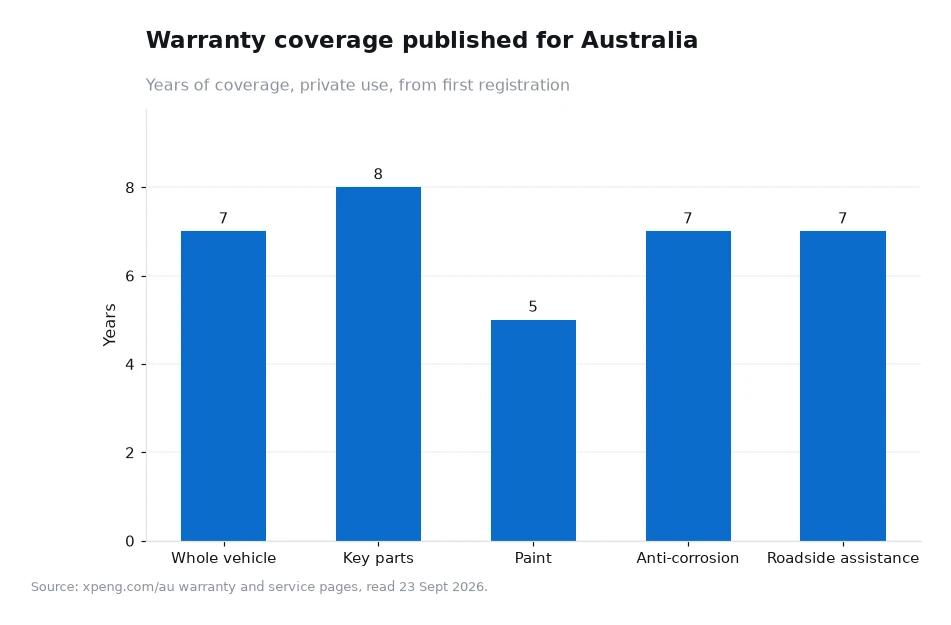
- The published warranty clock runs 7 years on the vehicle, 8 on key parts, 5 on paint, 7 on anti-corrosion and 7 on roadside assistance.
The three questions insurers ask about an electric car
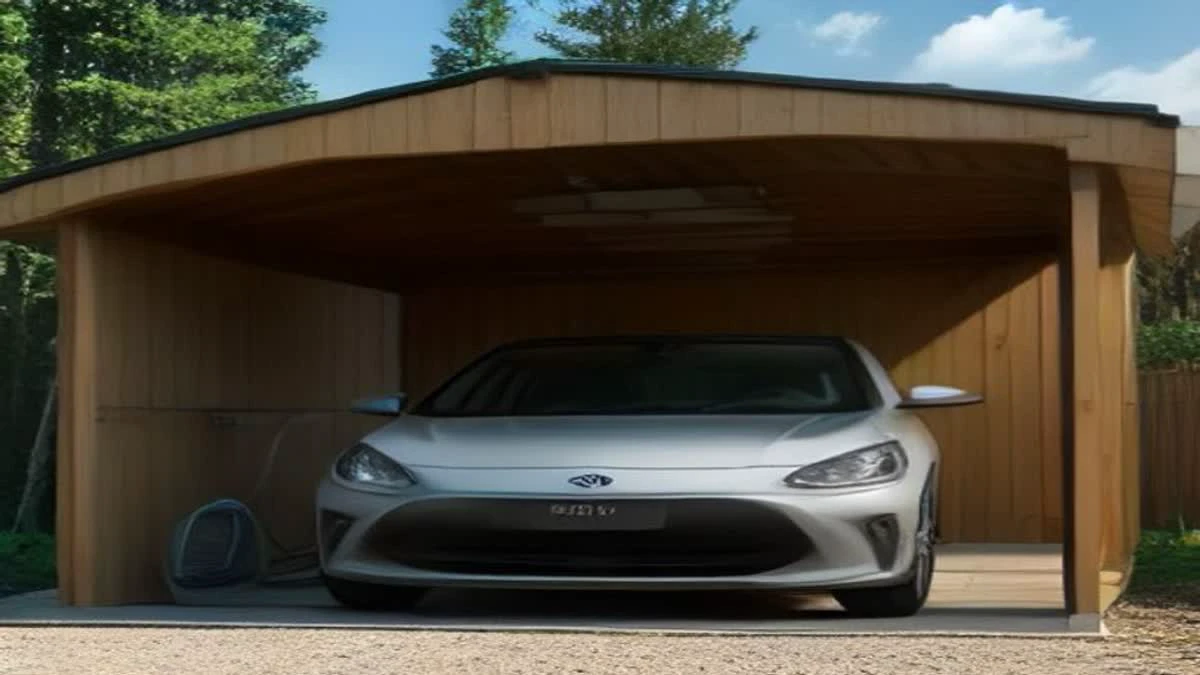
The first is where the car sleeps. A locked garage, a carport and a shared basement all carry different risk in an insurer's model, and the honest answer is the one to give, because a claim assessed against a wrong address is a claim refused. The second question is about repair: whether there is an authorised repairer in your area, and whether the battery pack and its high-voltage components need a specialist if the car is damaged underneath.
The third is about the equipment. A modern car carries cameras, radar and ultrasonic sensors, and any repair that disturbs them may need recalibration as part of the job. Say plainly what your car has, rather than assuming the insurer already knows. On this model the perception hardware is described as the XPENG Full-Stack Lofic Architecture, with a front binocular camera and a rearview camera that extend visual perception range by 125% and recognise 49 types of obstacles, static and moving.
Warranty and insurance are not interchangeable
It is worth separating the two in your head before anything goes wrong. Warranty covers manufacturing defects and specific components under published terms, set out in the XPENG ANZ Warranty and Maintenance Manual - Australia. Insurance covers accidental damage, theft and liability, under the contract you sign with the insurer. A flat battery on a cold morning is a warranty conversation; a kerbed wheel is an insurance one; a battery damaged in a collision is usually both.
The published terms are unusually detailed, which helps. Whole vehicle warranty is seven years or unlimited kilometres for private use, dropping to seven years or 160,000 km for commercial use, whichever comes first. Key parts - traction battery, battery management system, drive motor and intelligent power unit - run eight years or 160,000 km. Paint is five years with no distance limit and anti-corrosion is seven years, while the traction battery warranty provides a minimum of 70% of original capacity during the key-parts period; gradual capacity loss is described as normal for traction batteries.
| Question | Why it matters | Where the answer comes from |
|---|---|---|
| Is the battery covered against damage? | It is the most expensive single component | Your policy schedule, in writing |
| Who repairs the car? | High-voltage work needs the right workshop | Authorised dealer, then insurer |
| Are sensors recalibrated? | Affects cost and how the systems work after | Repairer, before work starts |
| What does warranty cover? | Defects, not accidents | XPENG ANZ warranty and maintenance manual |
Driver assistance, claims and responsibility
Assistance systems are not a defence in a claim, and it is worth being precise about that. XPILOT ASSIST is published as an assistance function: the driver must remain aware, monitor traffic and take over when needed, and the feature does not remove the driver's responsibility. If you tell an insurer your car steers itself, you have described something the manufacturer does not claim, and that mismatch is unlikely to help you.
What the systems do affect is repair. A windscreen replacement on a car with a forward-facing camera can require calibration afterwards; bumper damage can involve sensors and wiring that sit behind a plastic cover. Ask the repairer to confirm recalibration in the quote, and tell your insurer what is involved before authorising the work, because it is far easier to agree a scope in advance than to argue about it after the invoice arrives.
Charging at home raises questions that are worth answering before a claim rather than after one. Tell the insurer how the car is charged, whether a cable runs across a shared driveway, and whether any wallbox was installed by a licensed electrician, because those details sit in the risk assessment. If you rent, check whether the lease allows a charger before ordering equipment, and keep the installation paperwork with the policy documents. Cable theft is uncommon but not unknown, and a cable that lives in a locked garage is a different proposition from one left permanently plugged in at the front of a unit block.
Then there is the question of who you ring first. The published order helps: warranty for defects under the terms in the manufacturer's manual, roadside assistance for the seven years from first registration when the car stops, and the insurer for damage or theft. Owner support for Australian buyers now runs directly through XPENG ANZ, and customers who bought through the previous distributor are pointed to the same place, so one contact route serves both groups.
Worked example: renewals against the warranty clock
Here is an illustrative piece of arithmetic with its assumption stated: assume a comprehensive policy renewed every 12 months, and count those renewals against the published cover periods. Over the five-year paint term there are 5 renewals; over the seven-year whole vehicle term, 7; and over the eight-year key parts term, 8. Nothing about the arithmetic is a price - it is simply the number of times you will re-read a policy against a warranty that is still running.
The comparison has a practical use. If you change cars every four years, the paint and vehicle terms outlast your ownership and the buyer after you inherits the balance; if you keep cars for a decade, the key-parts term expires at year eight while the roadside assistance term ended at year seven. Servicing at the published interval of 12 months or 20,000 km, whichever comes first, keeps that warranty intact, and that rhythm is worth more than any loyalty discount on a policy.
Frequently asked questions
Does insurance cover the traction battery?
That depends on your policy, so ask the insurer directly and get the answer in writing. The manufacturer separately covers the traction battery for eight years or 160,000 km, with a minimum of 70% of original capacity during that period.
Do driver assistance systems affect a claim?
They can, because cameras and sensors may need recalibration after glass or bumper repairs. XPILOT ASSIST is an assistance function and the driver remains responsible for monitoring traffic at all times.
Two documents to read before you sign anything
Read the policy schedule and the warranty and servicing terms on the same evening, with a pen. The first tells you what your money covers, the second tells you what the car already covers, and the gap between them is what you are actually buying. Take the electric suv australia specification list into the same reading session so you can answer the equipment questions accurately, and check the XPENG X9 pages if you are insuring a seven-seater instead.
Then ring one insurer and ask the four table questions out loud. The answers you get will tell you more about the gap between warranty and insurance than any comparison site, and you will know within a week whether your current policy is the right shape for the car in the carport.
Warranty terms and service intervals above come from the manufacturer's Australian site, read 23 Sept 2026; insurance is a separate contract with your own insurer and nothing here is advice on cover. The renewal arithmetic is an illustrative example with its assumption stated, and XPILOT ASSIST remains an assistance function.[1]