Decoction or Infusion: Matching Vessel Design to Your Method
Decoction and infusion ask different things of the same steel. Infusion runs comfortably on two vessels, a mash/lauter tun and a kettle/whirlpool; decoction needs a vessel that can boil a portion of the mash and return it, which is why three vessels, occasionally four, are the practical floor for the method.
Key takeaways
- Two vessels plus a hot liquor tank cover single and step infusion; decoction wants a third vessel that can boil a thick mash portion.
- Published configurations in this range include a 500 L three-vessel set, 1,000 L in two, three and four vessels, 2,000 L as a two-vessel copper or a three-vessel set, and a 2,500 L four-vessel set.
- A worked decoction day runs about 90 minutes longer than the same brew length by infusion, which is the number to put against the price of the third vessel.
- Heating changes with the method: a decoction vessel must reach a boil with mash in it, not merely hold a rest temperature.
What Each Method Asks of the Vessel Set
A Brewhouse is a set of vessels rather than one tank: a mash/lauter tun, a kettle/whirlpool, and on bigger sets a separate mash kettle plus a hot liquor tank. Infusion uses that set by holding the mash at one temperature or stepping it up through two or three rests, then running the wort off into the kettle. Decoction uses it differently: a thick portion of the mash is pulled from the tun, boiled in a separate vessel and returned, which raises the main mash temperature by mixing rather than by heating the tun.
The consequence is structural, not cosmetic. Infusion can be done in the mash tun itself as long as the tun can hold and gently raise a temperature. Decoction needs a vessel with a boiling duty and a way of handling a thick, sticky load — which is why the method usually adds a vessel rather than a bigger one, and why the choice should be made before the drawing set is fixed rather than after the tanks are on the water.
Published Configurations and the Method Each One Suits
The published range gives a fair picture of how the trade divides. Two-vessel sets cover ordinary infusion brewing economically, because the tun does the mashing and the lautering and the kettle does the boiling and the whirlpool. Three-vessel sets add a dedicated kettle or mash kettle, which buys two things: a vessel free to boil while the tun lauthers, and a place to boil a decoction pull without disturbing the main mash.
Four vessels, the configuration published in the 2,500 L set, separate all four duties — mash, lauter, boil, whirlpool — and suit sites that brew most days and cannot afford a queue. Sizes matter less than the count here: the published 1,000 L set is offered in two, three and four vessels, and the 2,000 L set appears as a two-vessel copper or a three-vessel build, so the same brew length can be specified for two very different brewing cultures.
Heating Is the Detail Decoction Changes
Heating a mash tun to a rest temperature is a gentle duty. Boiling a decoction is not: the pulled mash is dense, it scorches easily on a hot surface, and it has to come to a rolling boil and go back without dragging burnt character into the main mash. That is the point at which a direct-fired or jacketed vessel earns its place, and where an undersized heating surface shows up as a slow pull, a long day and a beer with a scorched edge.
It is also why the inspection trail matters. This manufacturer runs five inspection steps on every shipment, one of which is jacket pressure testing, and every tank carries a data plate with the pressure-testing record and a serial number. For a vessel asked to boil a thick mash, the test record and the jacket design are not paperwork: they are the evidence that Hermann's heating surface was built for the duty you are about to give it.
Batch Rhythm, Lautering and the Case for a Third Vessel
Time, not volume, is what most small breweries run short of. With two vessels the kettle sits idle while the tun lauthers and the tun sits idle while the kettle boils, so the brew day is the sum of its stages. Adding a third vessel lets lautering overlap boiling, which typically removes about an hour from the day and turns a single-brew schedule into a comfortable one with room for cleaning and a second product.
That hour is worth more on a decoction schedule, because decoction already spends time on the pull: heat the portion, boil it, return it, mix, rest, repeat. A method that adds steps benefits most from a set that removes waiting, and the same arithmetic explains why a brewery that intends to brew most days chooses four vessels while a brewery that brews twice a week is usually better served by spending the difference on fermentation capacity.
| Method | Vessel set that fits | Heating demand | Brew-day pattern |
|---|---|---|---|
| Single infusion | Two vessels: mash/lauter tun and kettle/whirlpool, with a hot liquor tank alongside | Hold one mash temperature, then heat sparge water | One rest, one lautering, one boil |
| Step infusion | Two vessels, or three if the kettle must be free while lautering | Raise the mash through two or three rests without boiling it | Rests add 20-40 minutes to the day |
| Decoction, single pull | Three vessels: mash/lauter tun, mash kettle and kettle/whirlpool | Must boil a thick portion of the mash, so a direct-fired or jacketed vessel | About 90 minutes more than an infusion day |
| Double decoction | Four vessels, as in the published 2,500 L set | Two pulled-mash boils on top of the main boil | Two extra heating steps; lautering cannot start early |
| Parallel lautering | Three or four vessels, with the kettle free during lautering | Unchanged, but the kettle is occupied for longer | Removes roughly an hour by overlapping stages |
Worked example
The timings below are a worked example for one assumed brew length, not a promise about your plant. Assumptions: a 1,000 L brew, three brews a week, fifty brewing weeks a year, 45 minutes of cleaning after each brew, and a mash schedule of one hour for infusion against two pulled-mash steps for decoction.
Infusion day: 60 minutes of mash, 60 minutes of lautering, 90 minutes of boil and 30 minutes of whirlpool and knock-out comes to 240 minutes, plus 45 minutes of cleaning, so 4.75 hours. Decoction day: 20 minutes to dough in, 30 minutes for the first rest, two pull-boil-return cycles of 45 minutes each (90), 20 minutes for the second rest, 60 minutes of lautering, 90 minutes of boiling, 30 minutes of whirlpool and knock-out: 20 + 30 + 90 + 20 + 60 + 90 + 30 = 340 minutes, plus cleaning, so 6.4 hours.
The gap is 1.65 hours per brew. At three brews a week that is 4.95 hours a week, and across fifty weeks it is 247 hours a year, which is more than six forty-hour working weeks spent standing at a vessel rather than selling beer. Put that against a third vessel, which pulls lautering back alongside boiling and cuts roughly 60 minutes out of the decoction day: the vessel does not make better beer, it buys back time.
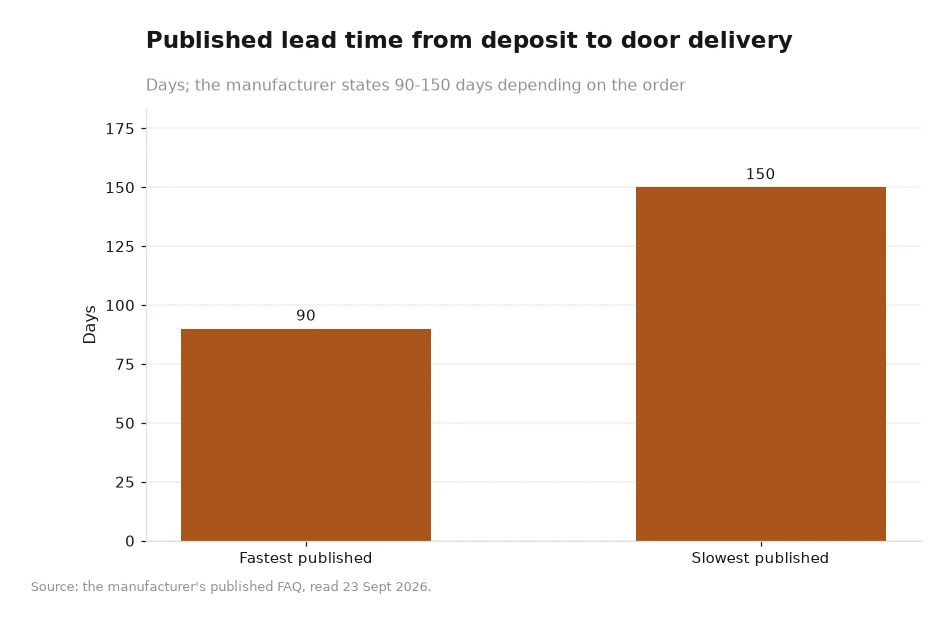
Finally, fit the decision into the delivery window. The published lead time is 90-150 days from deposit to door delivery, depending on the order, so a deposit wired on 1 February 2027 lands the equipment between 2 May 2027 and 1 July 2027. Deciding on two or three vessels before that deposit is what keeps the extra vessel inside the original window instead of pushing commissioning into the following season.
Frequently asked questions
Does decoction brewing need a different vessel set from infusion?
Decoction needs a vessel that can boil a portion of the mash and return it, so the practical minimum is a mash/lauter tun plus a kettle, or three vessels if the lauter tun should stay free while the kettle works. Infusion runs comfortably on a two-vessel set with a hot liquor tank beside it.
Which published configurations cover decoction and infusion?
The published range includes a 500 L three-vessel set, 1,000 L sets in two, three and four vessels, 2,000 L as a two-vessel copper or a three-vessel build, and a 2,500 L four-vessel set. Two vessels suit infusion, three suit decoction with step mashing, and four suit brewing most days without waiting for a vessel.
Decide the Method, Then the Metal
Write the mash schedule down before the equipment list, because the schedule dictates how many vessels the system needs and how they are heated. A brewery that has chosen decoction and ordered two vessels has made an expensive decision in the wrong order.
The wider brewery equipment range shows how the same configuration appears at other sizes, and the contact page is the right place to send a mash schedule and ask what it implies for the vessel count.
Ask two final questions of any quotation: which vessel boils the decoction, and what the lautering overlaps with. If the answers are vague, the design was priced for a method you are not planning to brew, and no amount of stainless will make the schedule fit. Twenty-three years of design work in more than seventy countries means the awkward questions have been asked before, so ask them early.
Published figures here come from the manufacturer's own website (hembrewing.com), read 23 Sept 2026: the vessel configurations and sizes, the five shipment inspection steps including jacket pressure testing, the tank data plates and the 90-150 day delivery window. Timings, vessel counts and hours saved are the author's own labelled assumptions.[1]